
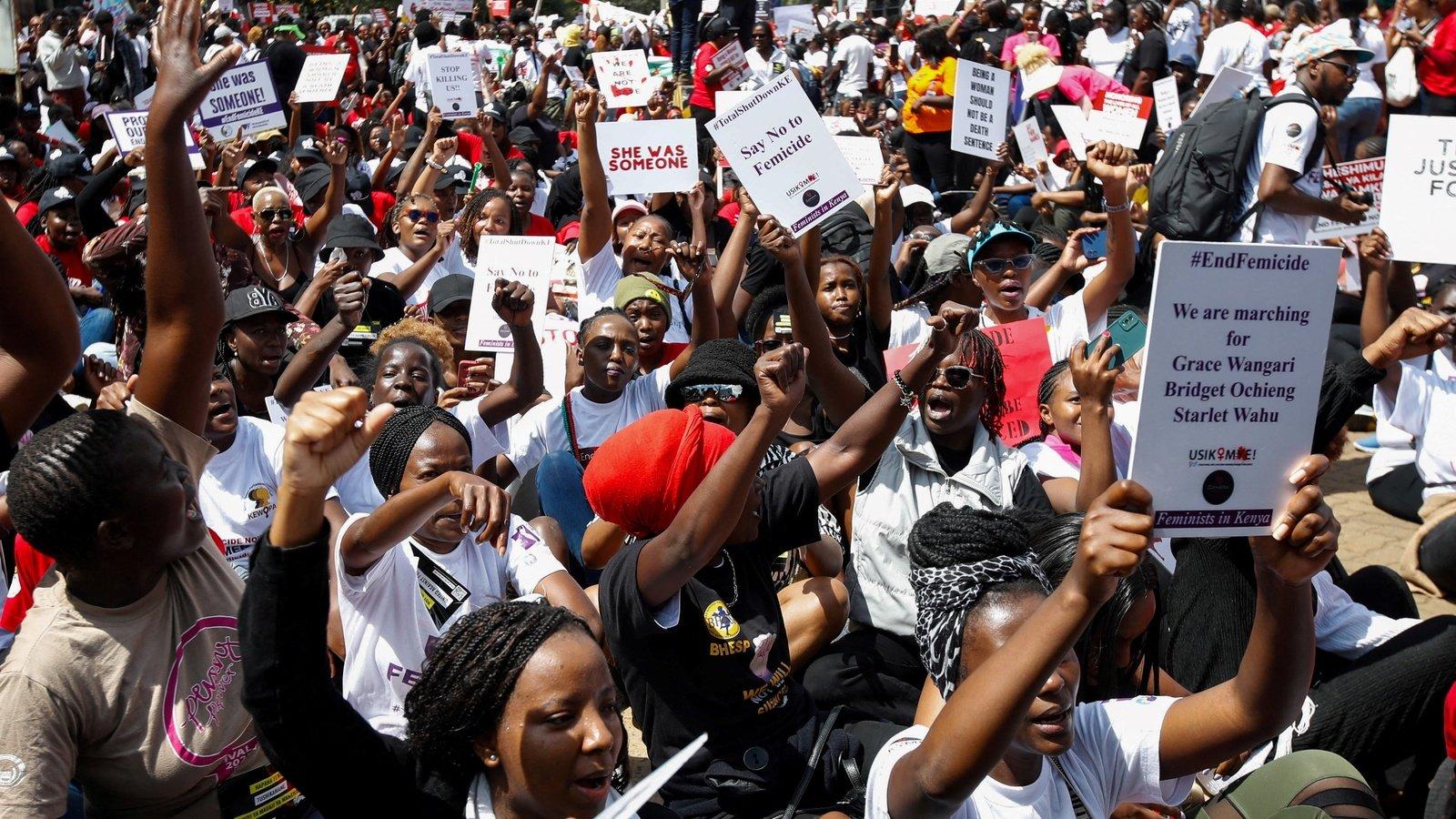

A girl leaves school and does not return home, at first, people say not to panic, maybe her phone died, maybe she went to visit a friend, maybe she just needed space. But as hours slowly turn into days, fear begins to settle inside the people who love her. Her photo starts circulating online, shared across WhatsApp groups and Facebook timelines with captions pleading for help. Somewhere in Kenya, another mother stops sleeping, another sister keeps refreshing her phone, another family begins preparing themselves emotionally for an ending they are too afraid to say out loud. Because lately, when girls go missing in this country, people have learned to fear the worst before the story is even complete. Too often, these girls are found assaulted, dumped in bushes, abandoned in rivers, hidden in empty rooms, or discovered by strangers long after their families have already broken from worry. And after every burial, the country pauses briefly to mourn women before quickly moving on to the next headline. Femicide in Kenya is no longer shocking because it has become painfully familiar. That familiarity is what makes it dangerous.
Across the country, women are quietly changing how they live in order to survive. Women share live locations before dates. They text friends the names of the men they are meeting. They avoid walking alone at night. They pretend to call someone while entering lonely streets. Some hold keys between their fingers like weapons while others memorize emergency escape routes in buildings they enter for the first time. Girls are learning survival before adulthood. Yet even with all these precautions, women are still dying. Reports from human rights organizations continue to show rising cases of women and girls being killed across Kenya, many by people they knew and trusted. But statistics alone cannot explain what this violence is doing psychologically to women. Women are not only mourning the dead; they are living in anticipation of violence. Fear has become routine.
While national conversations often focus on Nairobi, another painful reality has been growing across Western Kenya. Counties such as Kisumu, Kakamega, Busia, Siaya, Homabay, and Bungoma continue witnessing disturbing cases involving missing girls, murdered women, and young female students whose futures are violently cut short. In technical institutes and colleges, fear has quietly settled among young women trying to build lives for themselves. Students leave home carrying dreams in backpacks and sometimes return in coffins or do not return at all. One recent case involved a first-year female student allegedly killed by her boyfriend, a story that triggered outrage and heartbreak online. Other cases involving missing school-going girls in Homabay and vihig left families desperately searching for answers while communities waited anxiously for updates. These are only the cases that reach public attention. Many others disappear into silence before they ever become headlines.
One of the most painful contradictions in Kenya’s response to this crisis is that although women are dying in patterns, the law still struggles to formally recognize that pattern itself. Kenya criminalizes murder, but femicide the targeted killing of women and girls because they are women is still not legally recognized as a distinct crime. Words matter because when a country fails to properly define a crisis, it becomes harder to track it, prevent it, prosecute it, or respond to it with the urgency it deserves. Even the Presidential Technical Working Group on Gender-Based Violence and Femicide acknowledged that the absence of a proper legal framework has weakened investigations, accountability, and national tracking systems, BUT WHERE ARE THEY NOW!!!. Yet while discussions continue in boardrooms and taskforces, families continue burying daughters. Women continue disappearing. Communities continue grieving.
The public frustration is growing because the cycle has become painfully predictable. A woman is killed. Social media erupts in outrage. Leaders issue statements. Hashtags trend for a few days. Press conferences are held. Committees are formed. Then silence returns until another woman dies and the process begins again. Many Kenyans no longer feel convinced that the country is treating femicide with the seriousness it deserves because responses often appear reactive instead of transformative. The violence itself is also deeply connected to broader systems of inequality. Femicide does not happen in isolation. It grows from misogyny, entitlement, economic dependence, weak protection systems, online harassment, normalized abuse, and cultures that teach women endurance more than escape. Many women remain trapped in violent relationships because leaving can also mean homelessness, hunger, stigma, losing financial support, or risking the safety of their children. Survival becomes complicated when the systems meant to protect women are unreliable.
Perhaps the most devastating part of Kenya’s femicide crisis is how collective the fear has become. Every new case feels personal to women because every woman can imagine herself in the story. A missing classmate. A roommate who stopped answering calls. A sister who never made it home. A friend whose location suddenly went offline. The fear no longer belongs only to victims’ families. It now belongs to women as a group. Human rights organizations continue warning that violence against women and girls remains widespread in Kenya, with high femicide rates and systemic accountability failures. Yet despite the rising deaths, many women still feel unheard, unprotected, and politically invisible.
Justice cannot continue meaning candlelight vigils and hashtags after women have already died. Justice should mean legally recognizing femicide as a distinct crime, strengthening investigations, improving survivor protection systems, ensuring faster prosecution of cases, creating safer learning institutions, supporting mental health services, and building economic systems that allow women to leave violent situations safely. Justice should mean prevention rather than condolences. The terrifying thing about femicide in Kenya is not only how women are dying. It is how ordinary these deaths are beginning to sound. A missing poster. A body discovered. A grieving mother. Another trending hashtag. Another funeral. Then life moves on for everyone except the families forced to live with the silence left behind.
A country should never become so used to losing women that fear becomes part of girlhood!!!